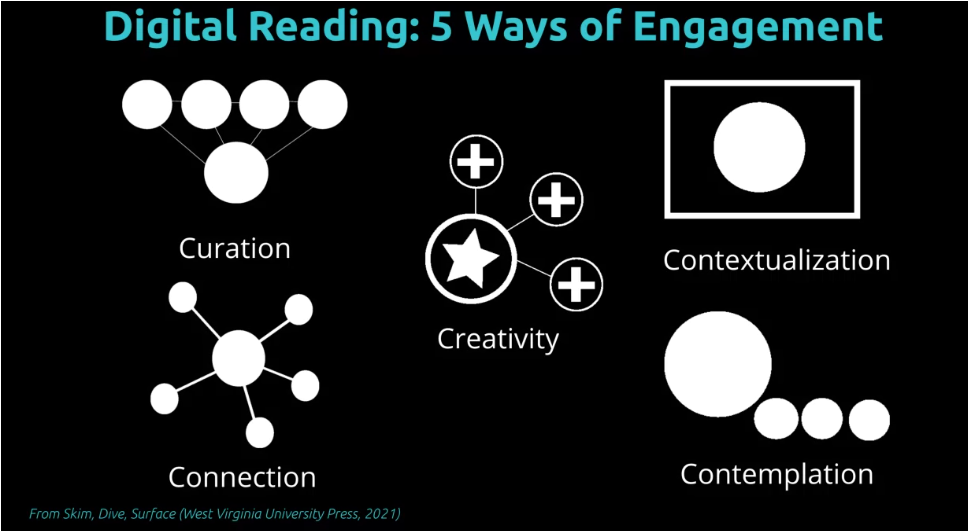
"but what do I do with a reading?"
[[digital reading]]: 5 ways of engagement
"when you are sewing, you usually follow a [[pattern]]. if you are more of an expert like a [[project runway]] contestant, you use patterns to guide you. social annotation provides scaffolding to engage with digital text."

[[digital literacy]] development in three parts by [[coiro 2015]]:
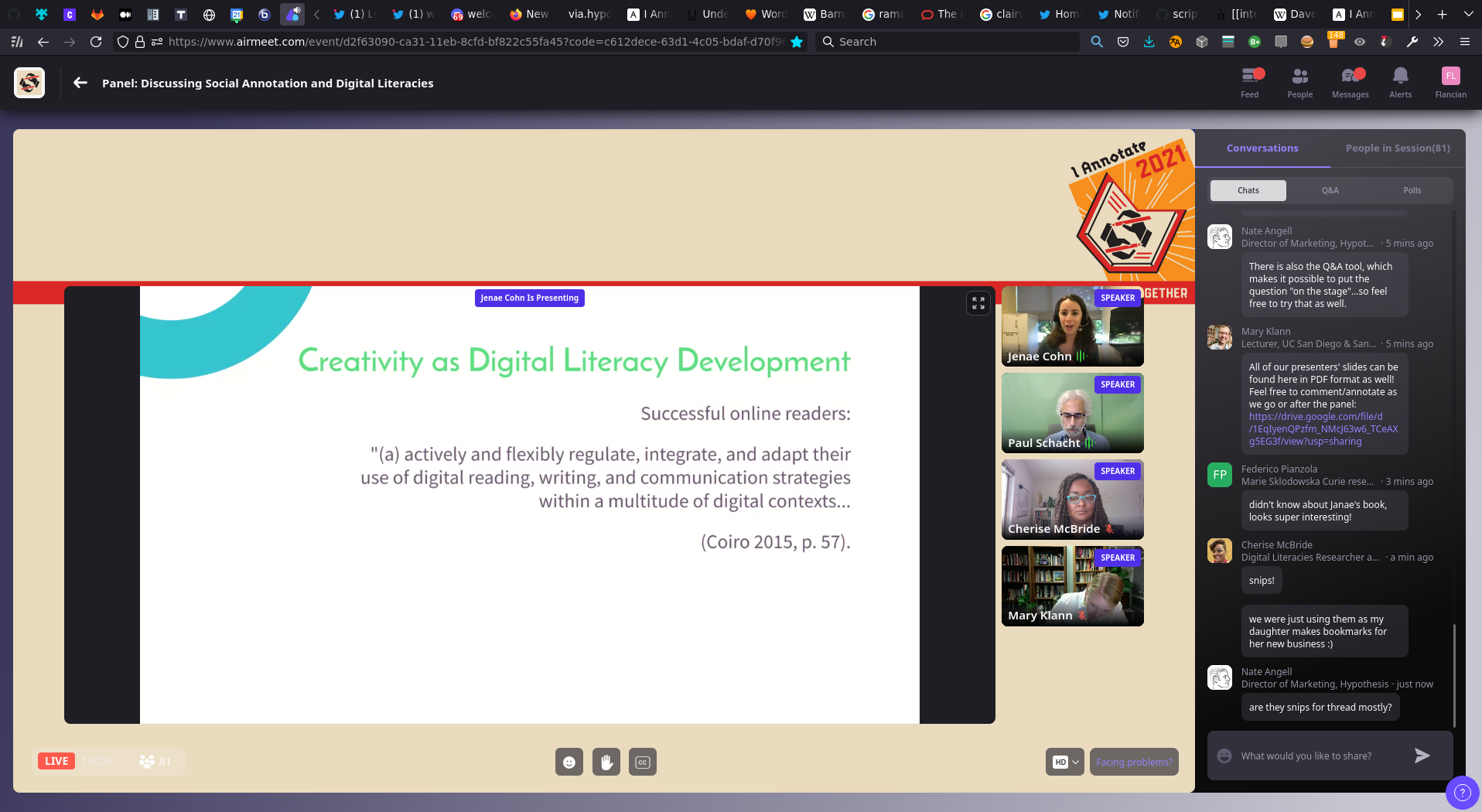
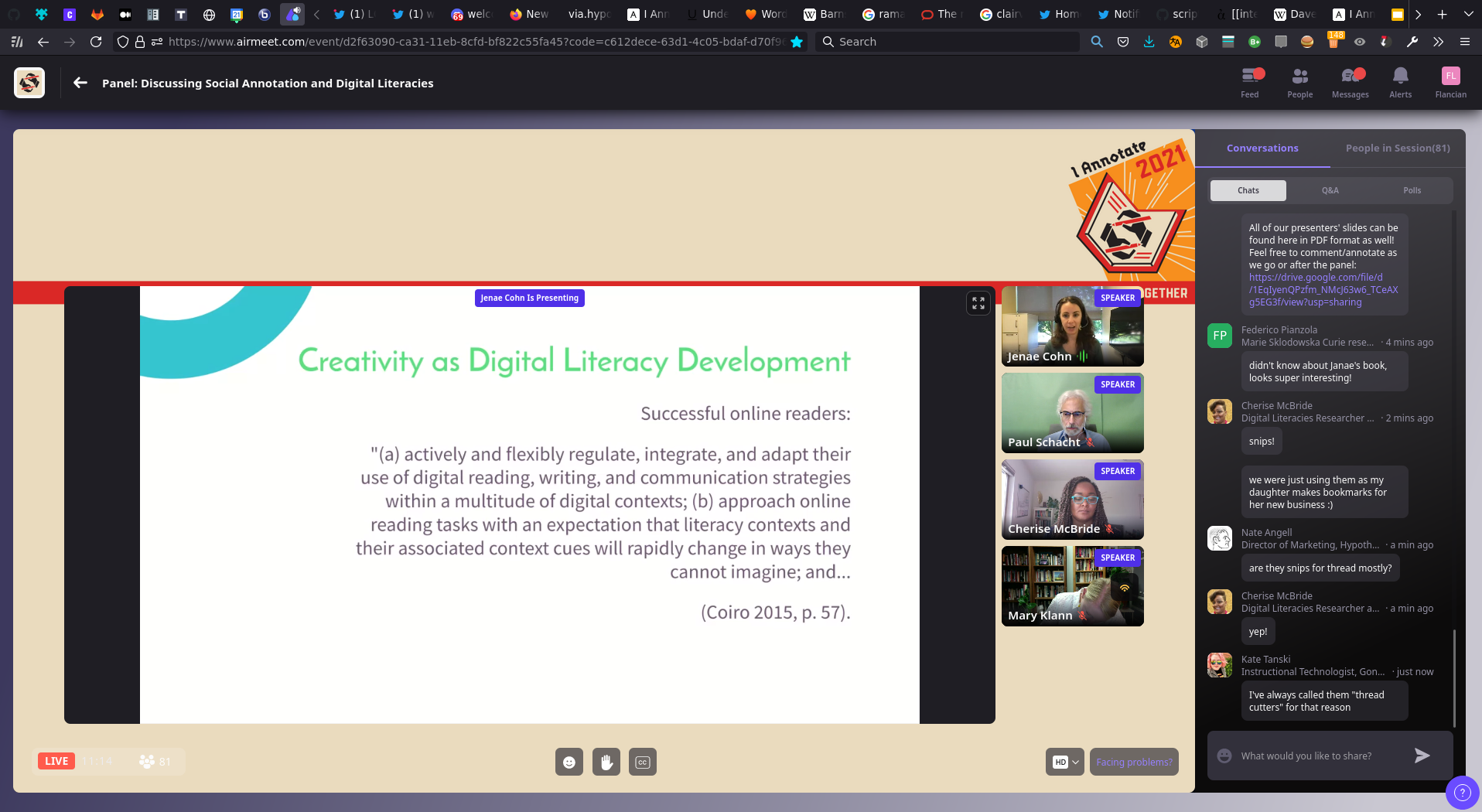
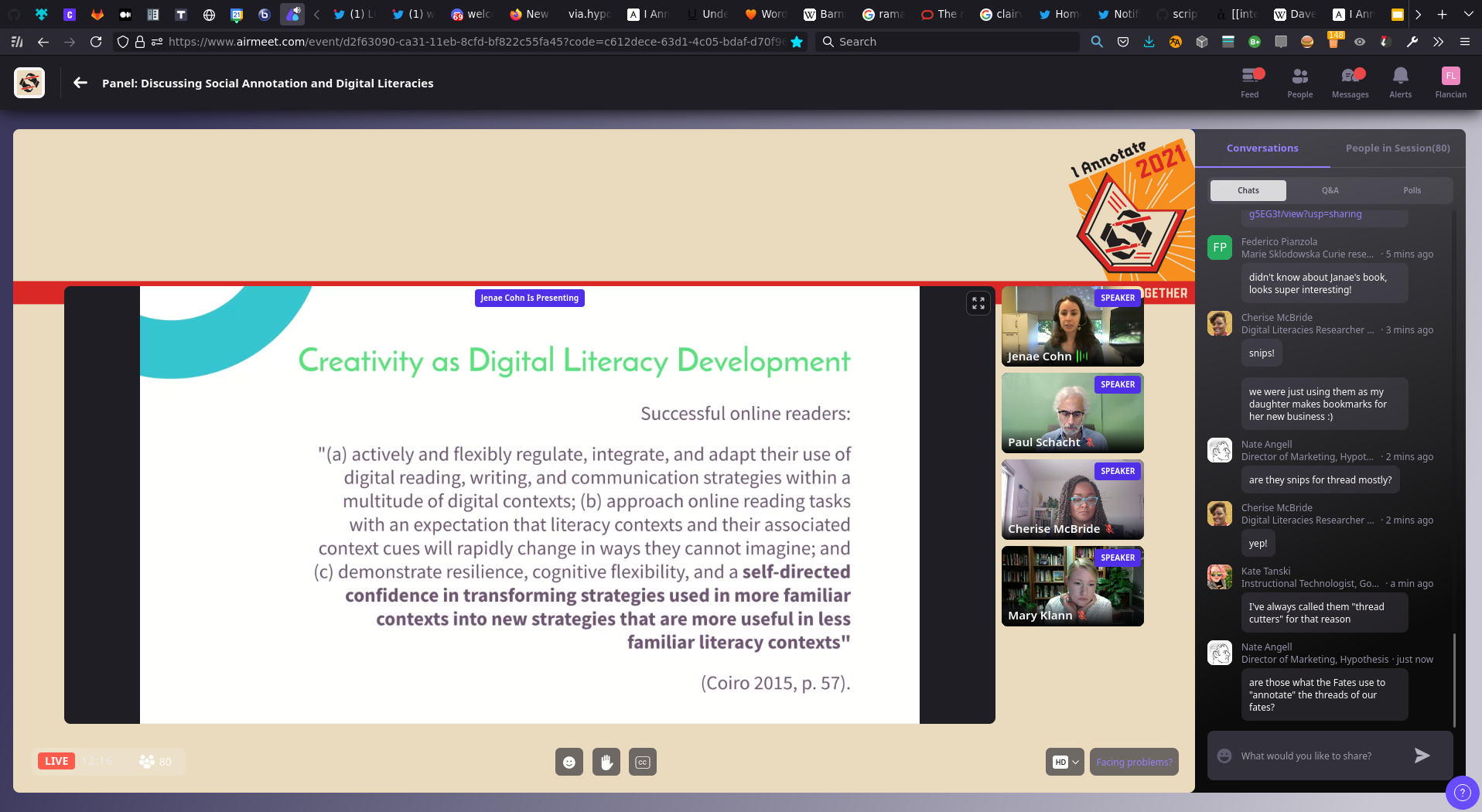
The most advanced users have "a self-directed confidence in transforming strategies used in more familiar contexts into new strategies that are more useful in less familiar literacy contexts."
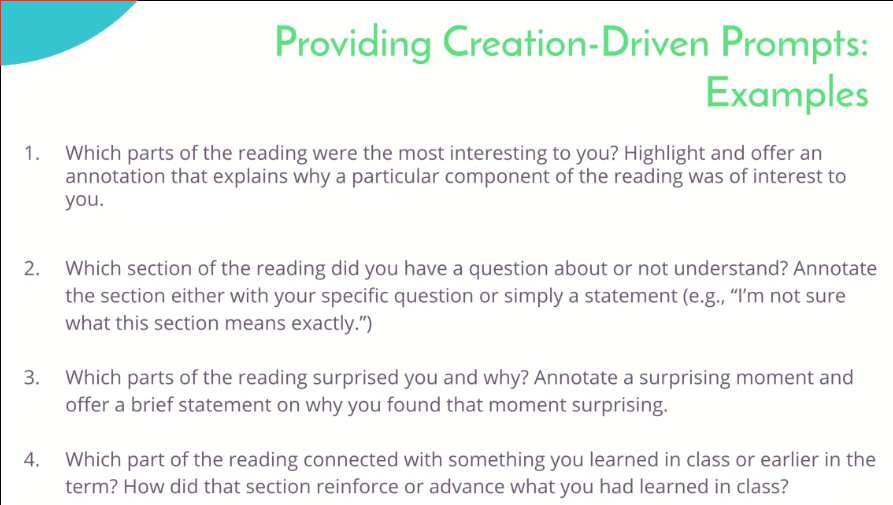
Creation-driven prompts.
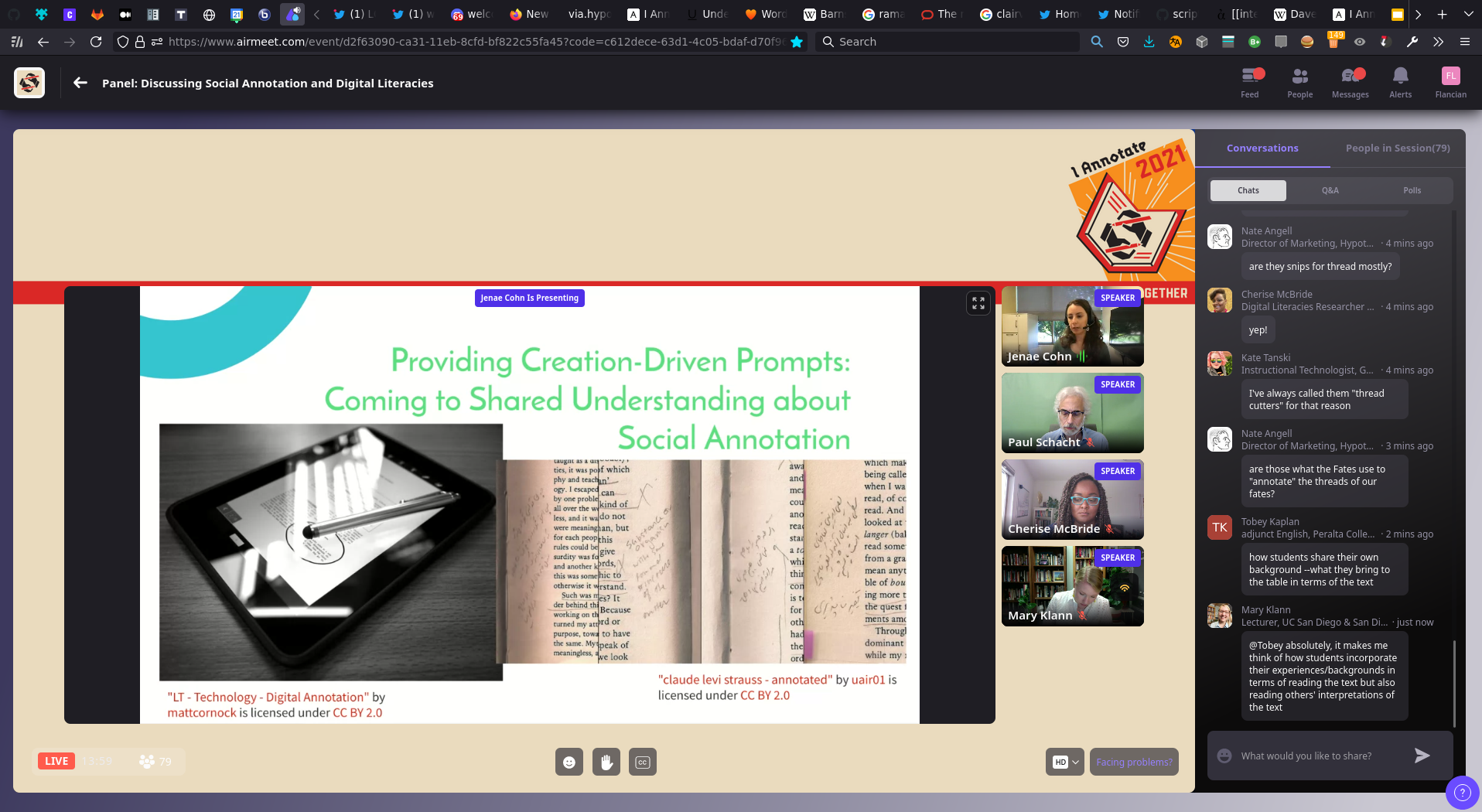
"making things visible: annotation and digital pedagogy"

It’s an opportunity to have a conversation. It carries some [[risks]]. Social annotation is [[thinking publicly]]. Partnership with [[marginal syllabus]].
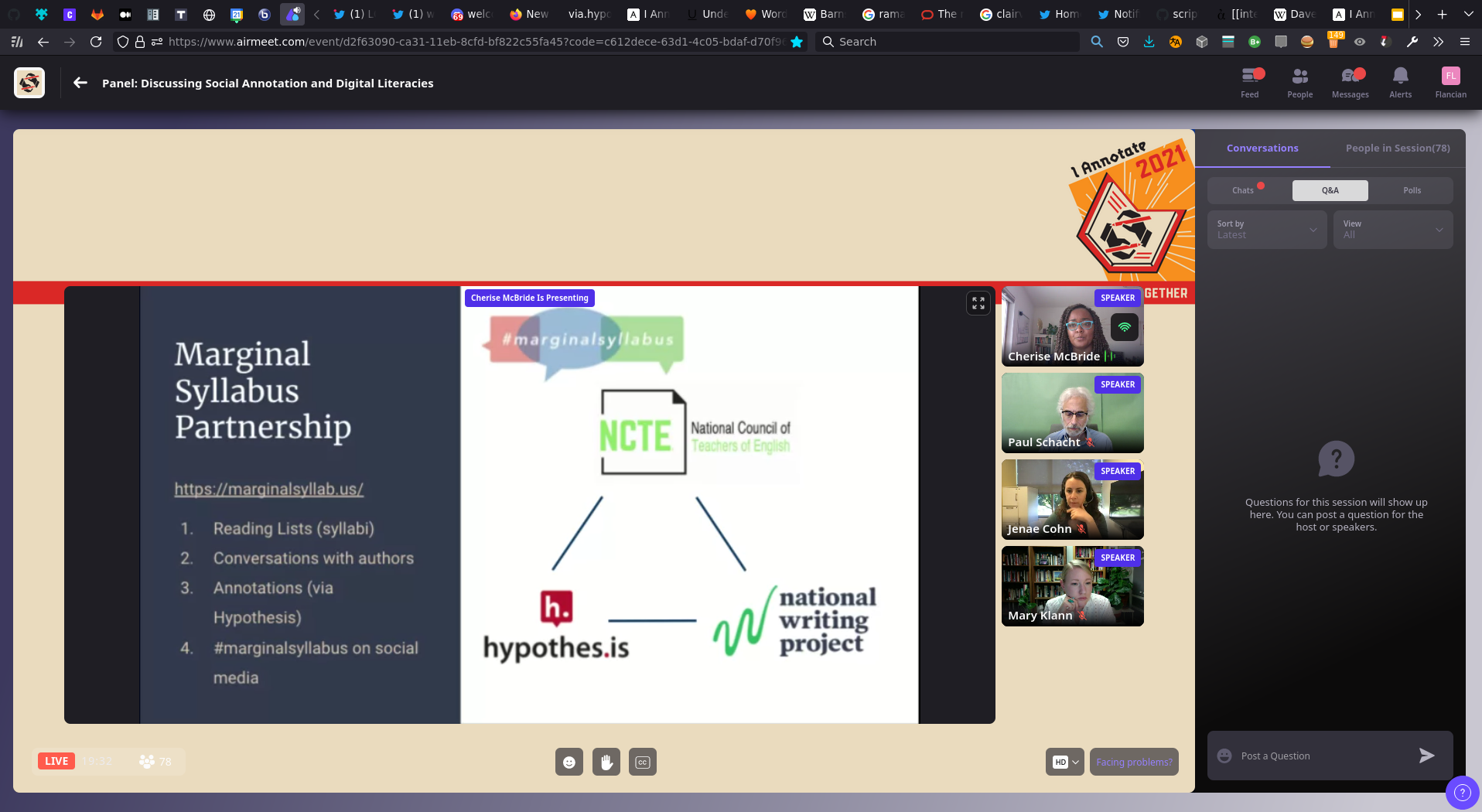
Why to annotate? "It’s an [[act of love]] because of one’s commitment to stay in relationship with the creator and other readers and observers."

Risks:
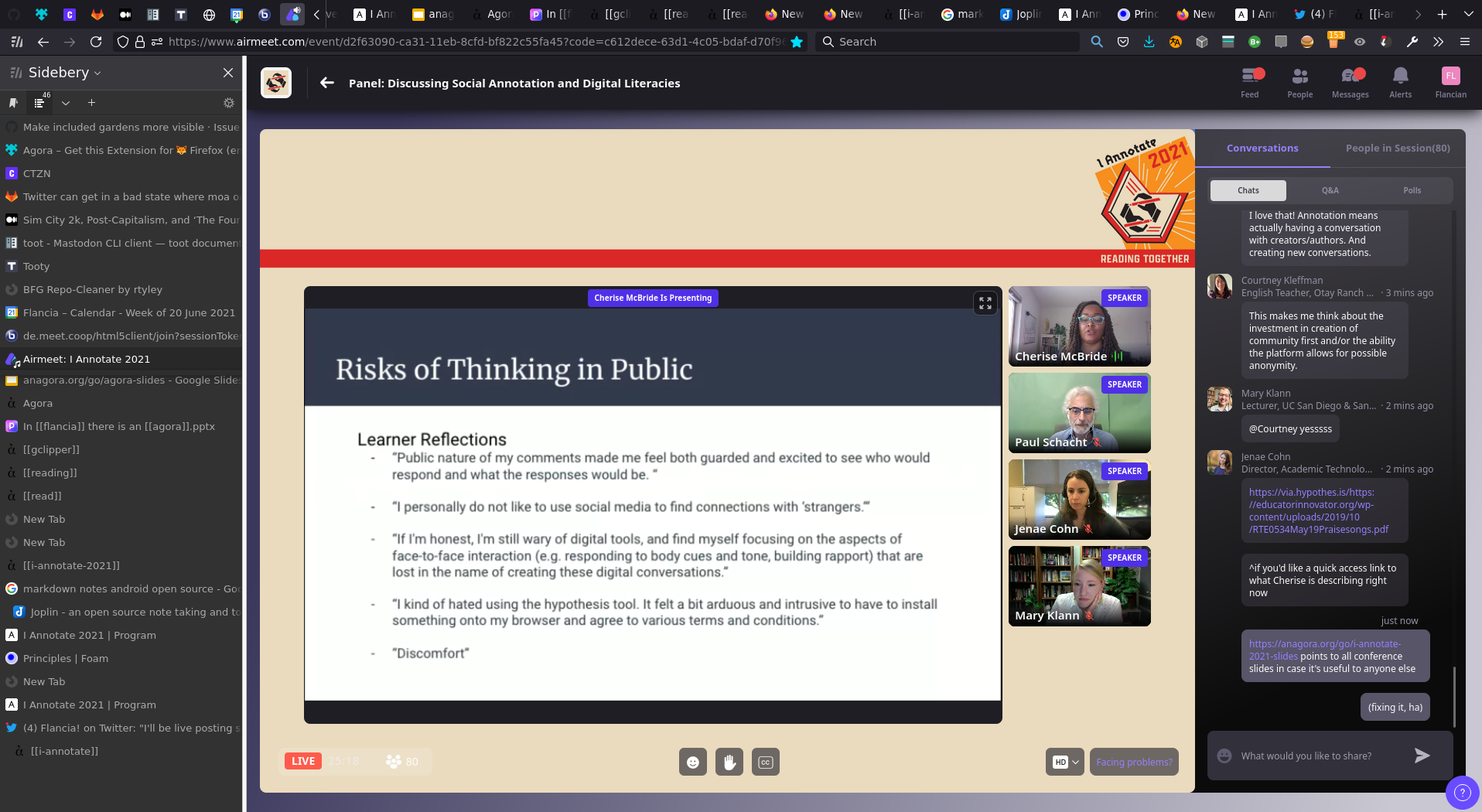
Collegiality:
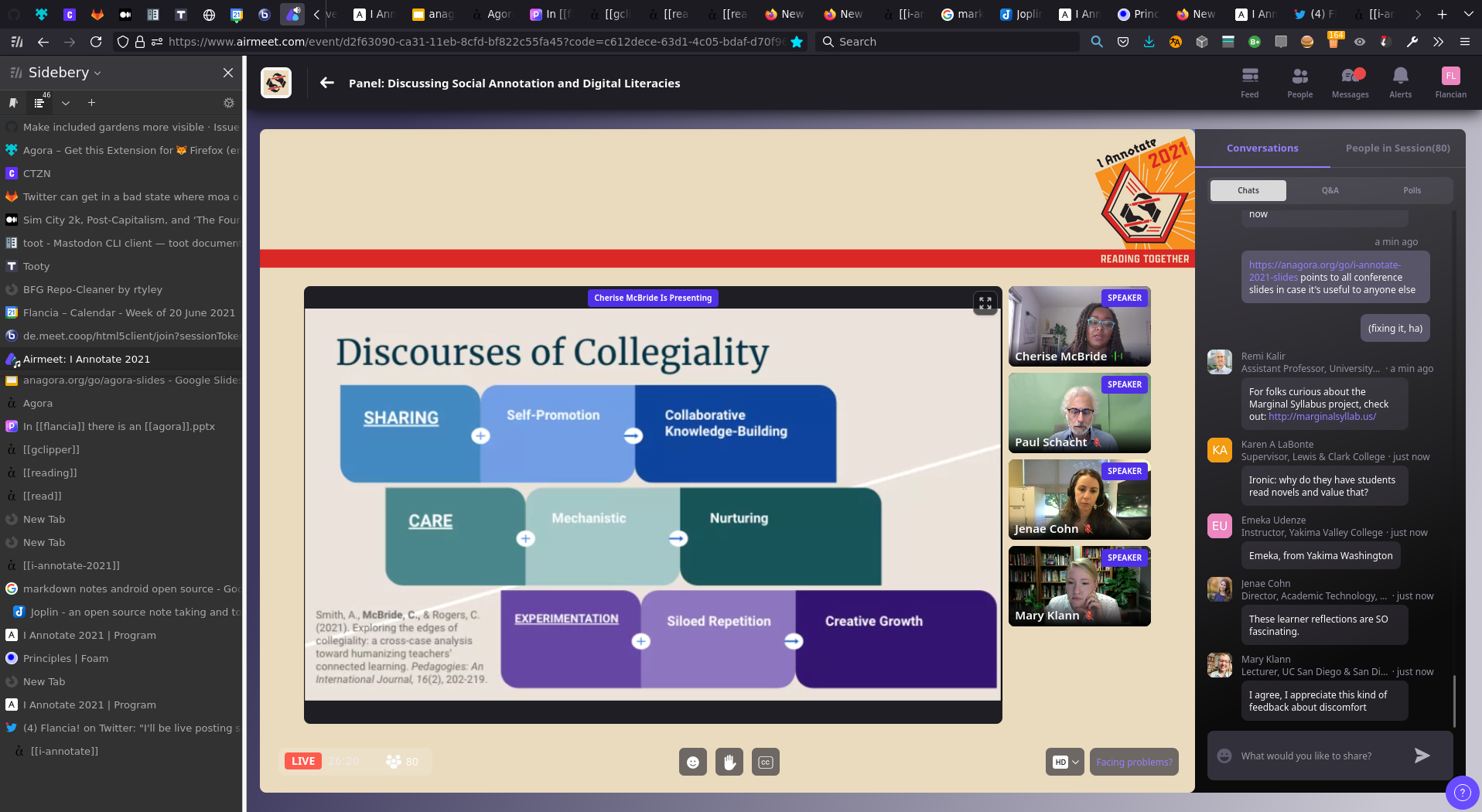
(Missed some slides here due to technical problems.)
Ways of annotating: explicate contextualize argue converse connect message opine.
[[William James]]!

[[gardner campbell]] [[i annotate 2019]] on knowledge emotions: https://www.youtube.com/watch?v=P-uuWcmzpgw (thank you [[nate angell]]!).
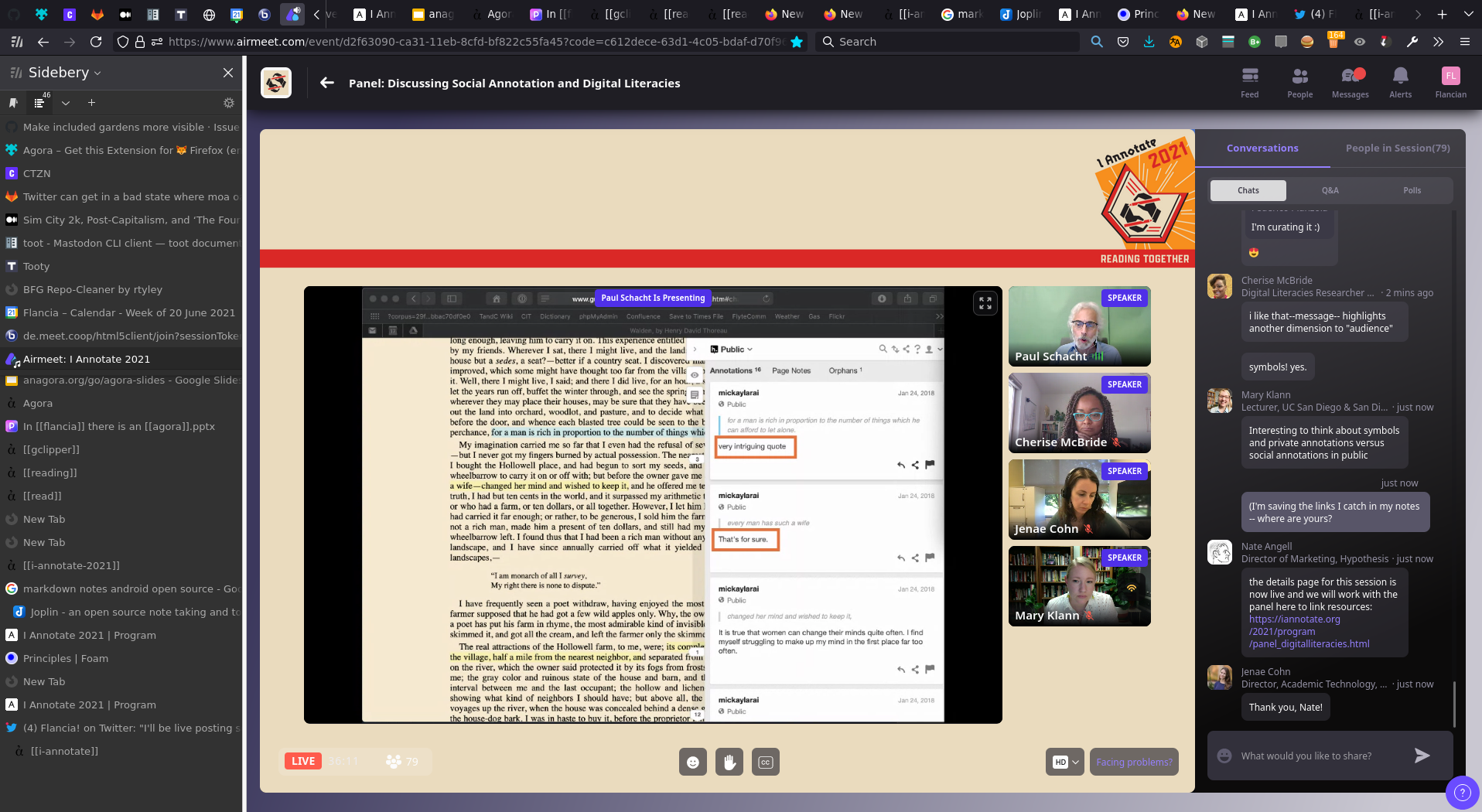
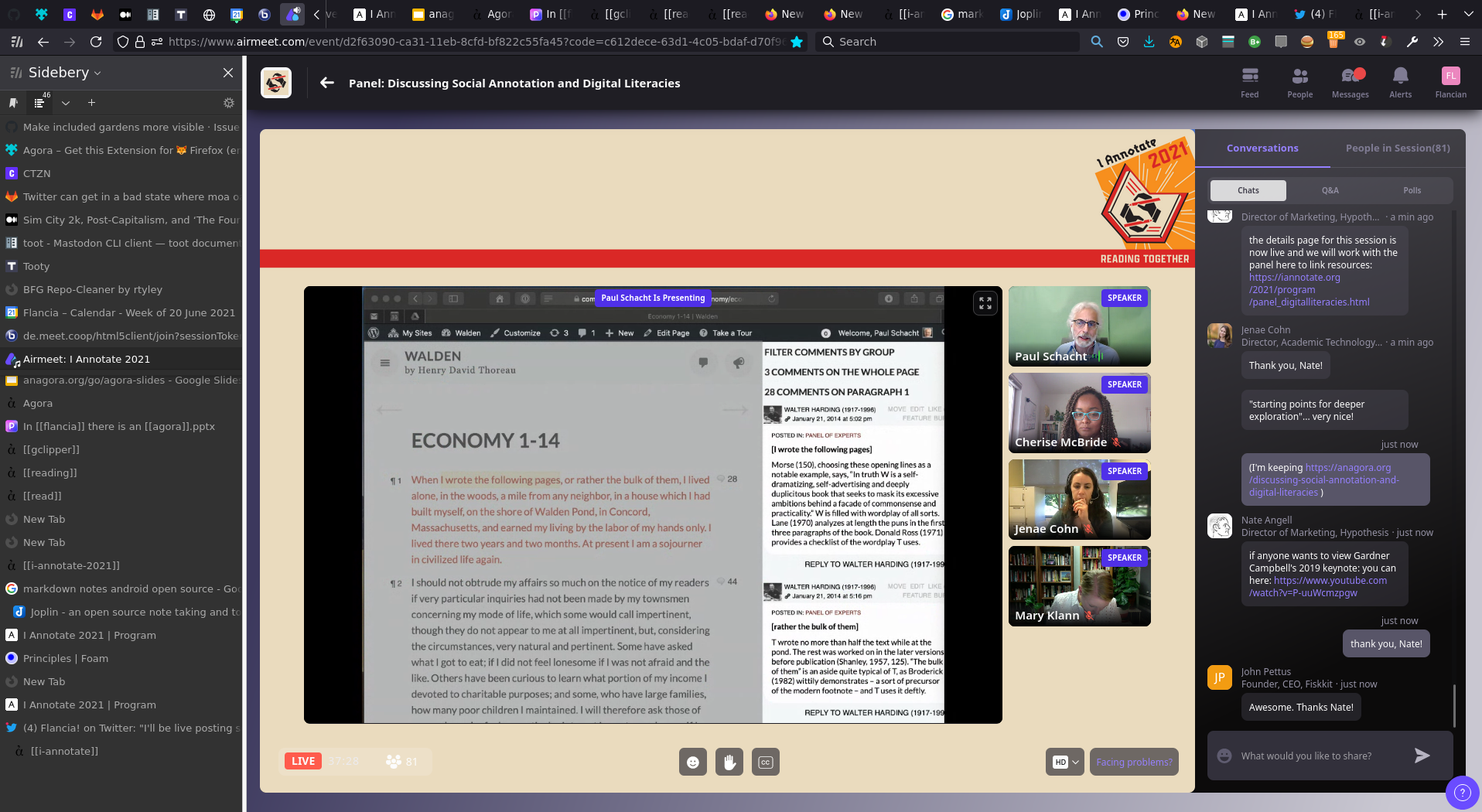
Site was preseeded with annotated Walden:
[[word cloud]]:
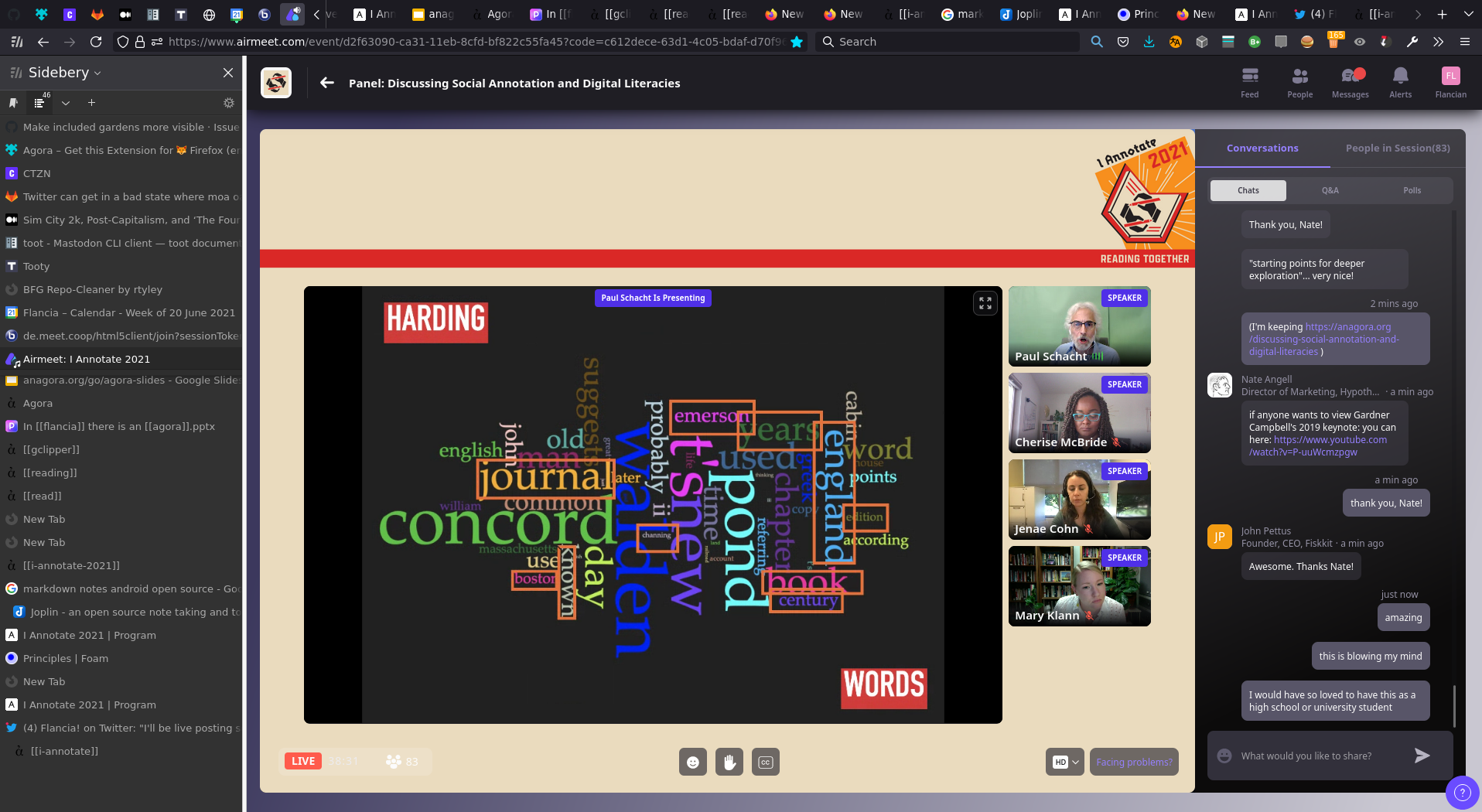
Harding’s verbs: 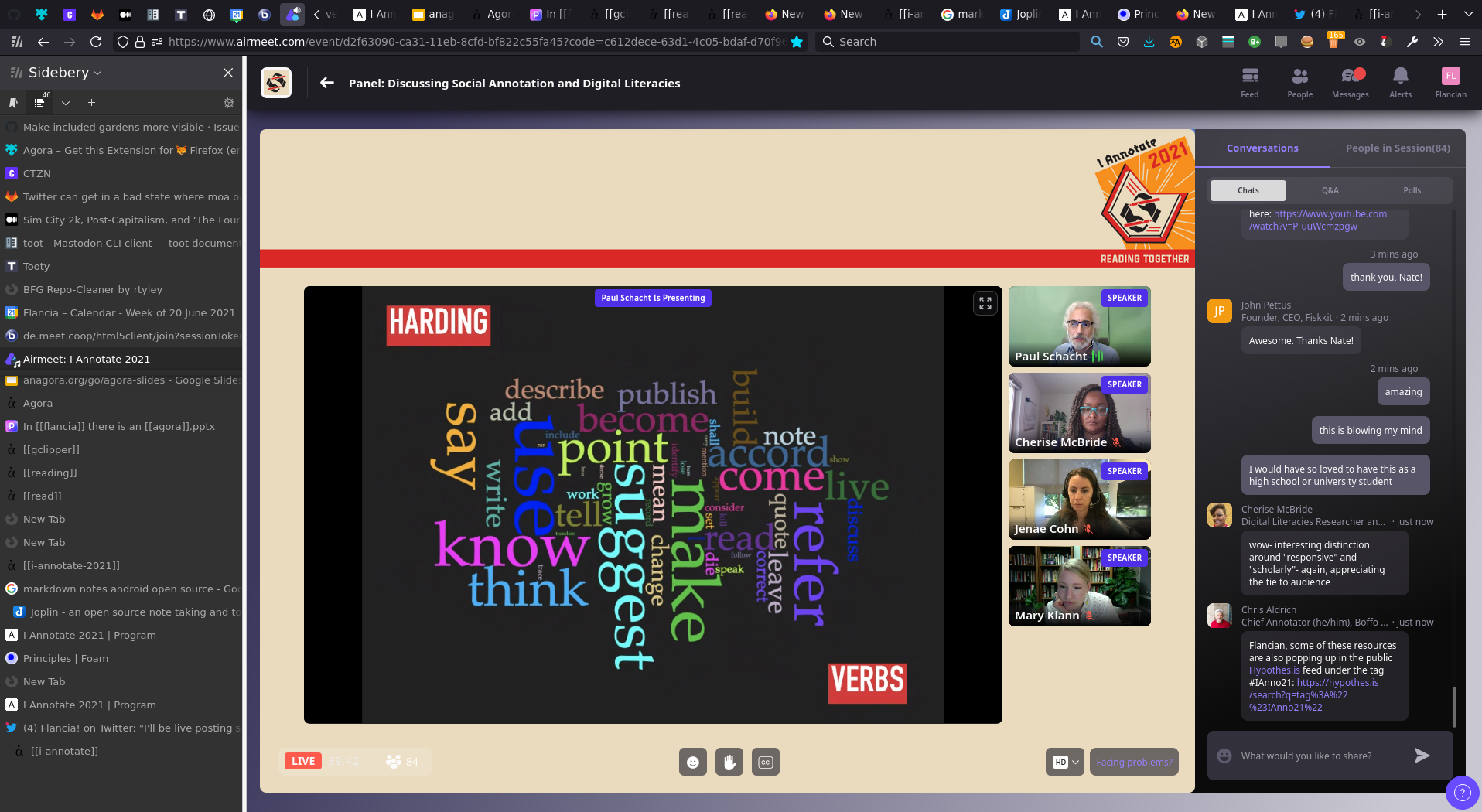
Other readers: 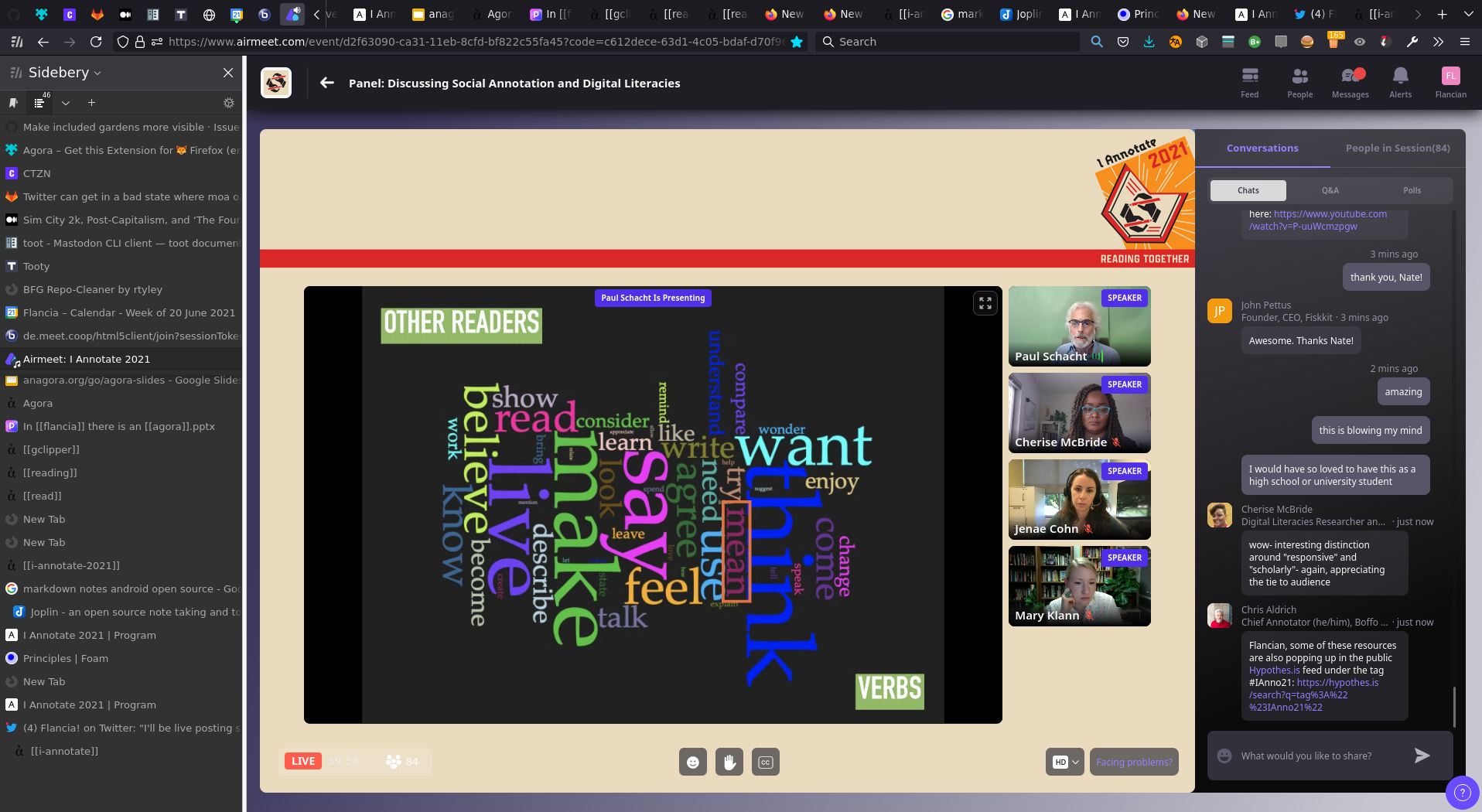
Harding is interested in historical time, sees in numbers. More in the concrete than the abstract.

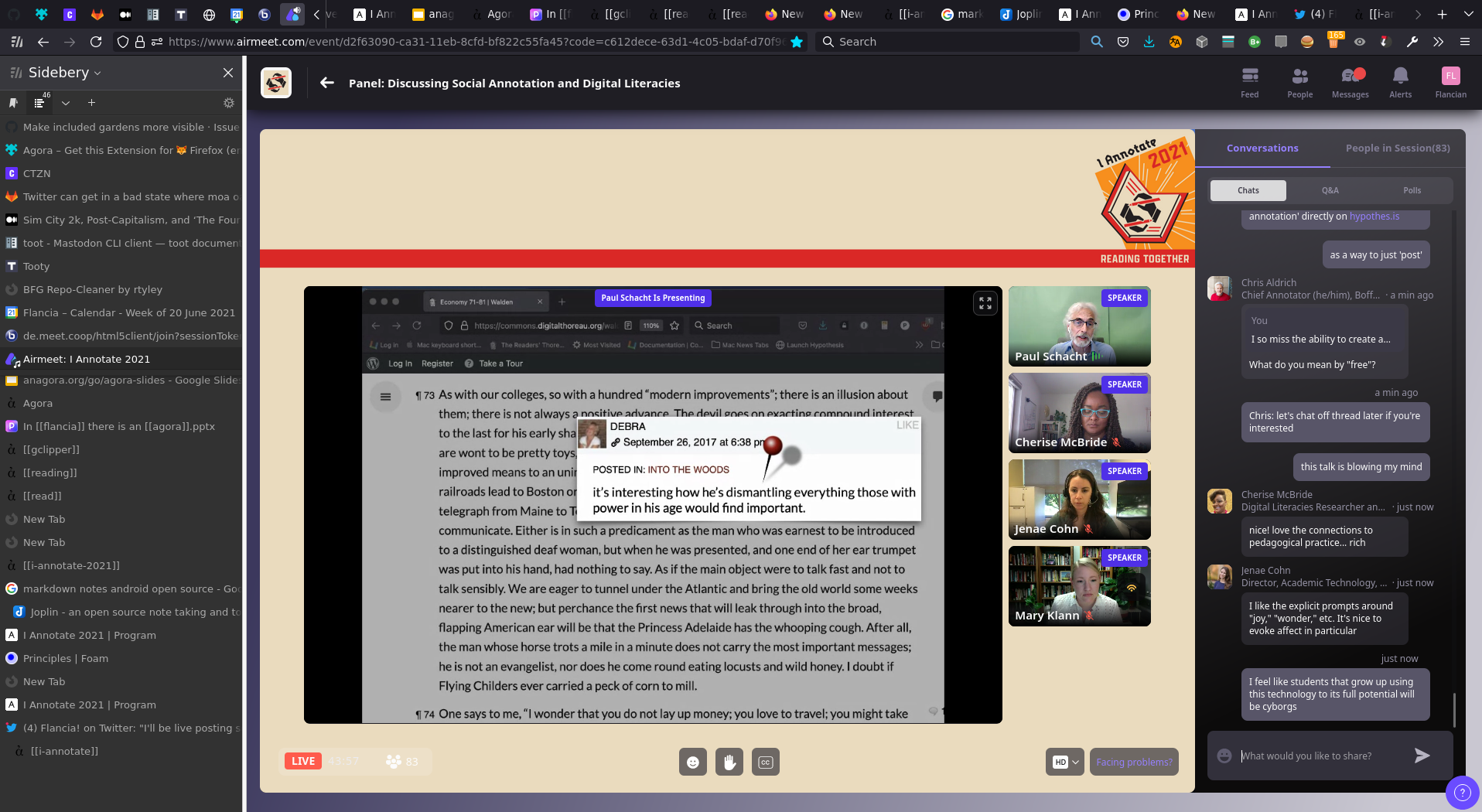
Debra’s comment expresses a knowledge emotion plus says what’s interesting about it, yet doesn’t feel like a forced explanation:
[[prompts]] 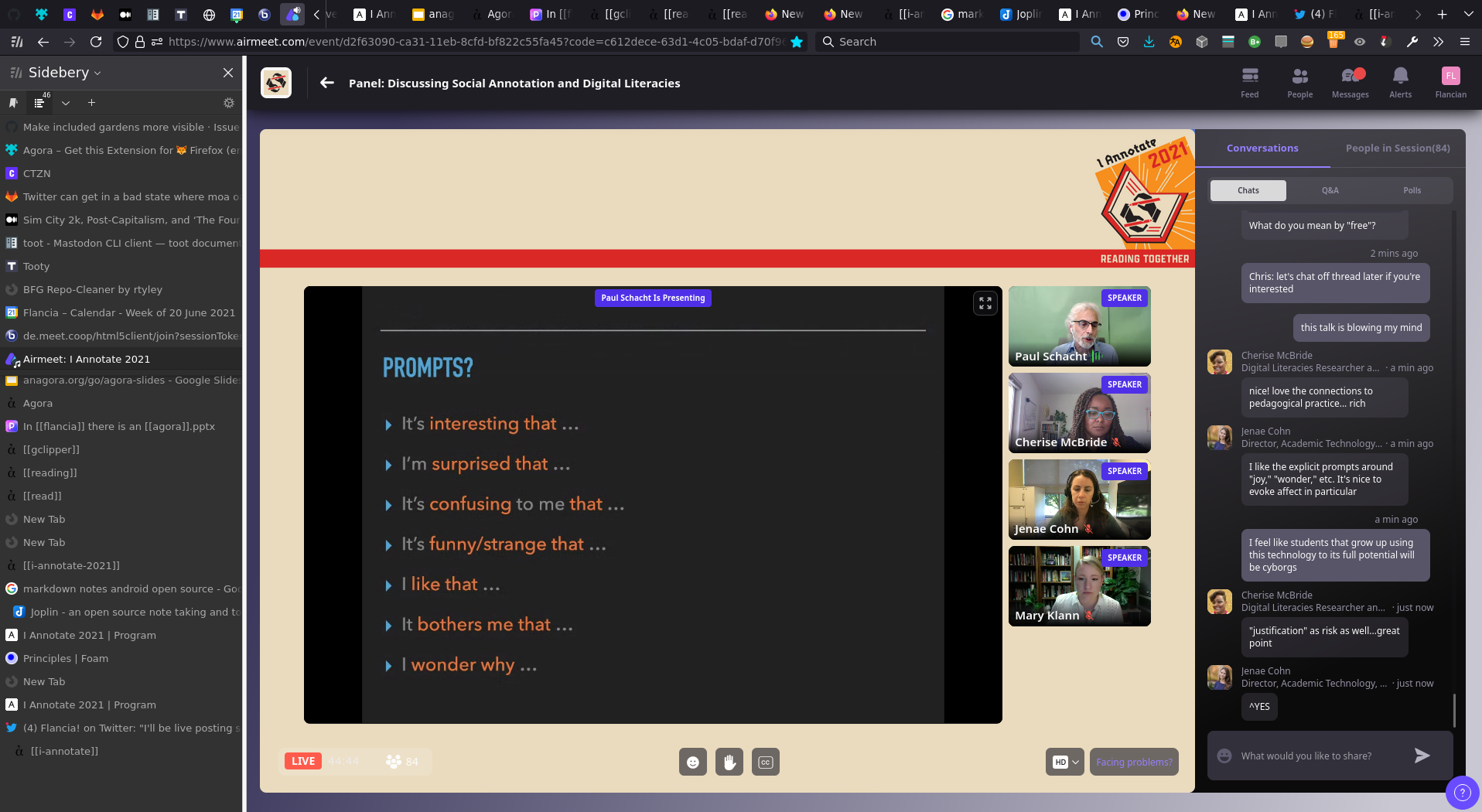
[[chris aldrich]] posted a feed: https://hypothes.is/search?q=%22reminds+me+of%22
[[courtney kleffman]]: "What occurs before and after the annotation moment also drives how students view its purpose within the learning process. I often ask student to engage in metacognitive reflection post social annotation. It’s not graded, but leads to something else."

(great conversation in the panel and in the chat)
[[metacognition]] and [[reflection]].
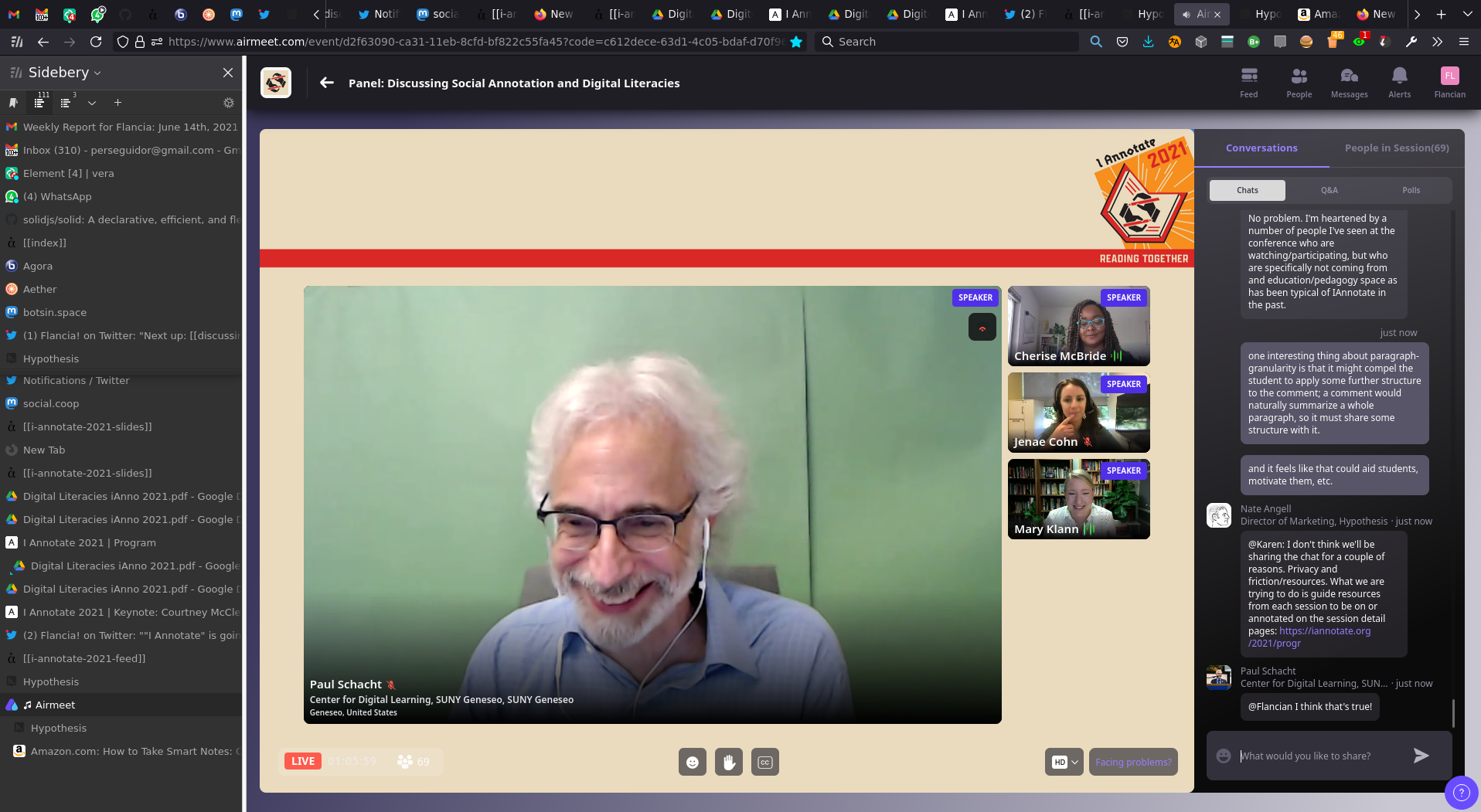
[[paul schacht]] have them look at other people’s annotations. Have students rifle through their own past annotations; marks in their books. Try to characterize the marks that they made; think about what they were trying to accomplish
What’s your favourite annotation tool?
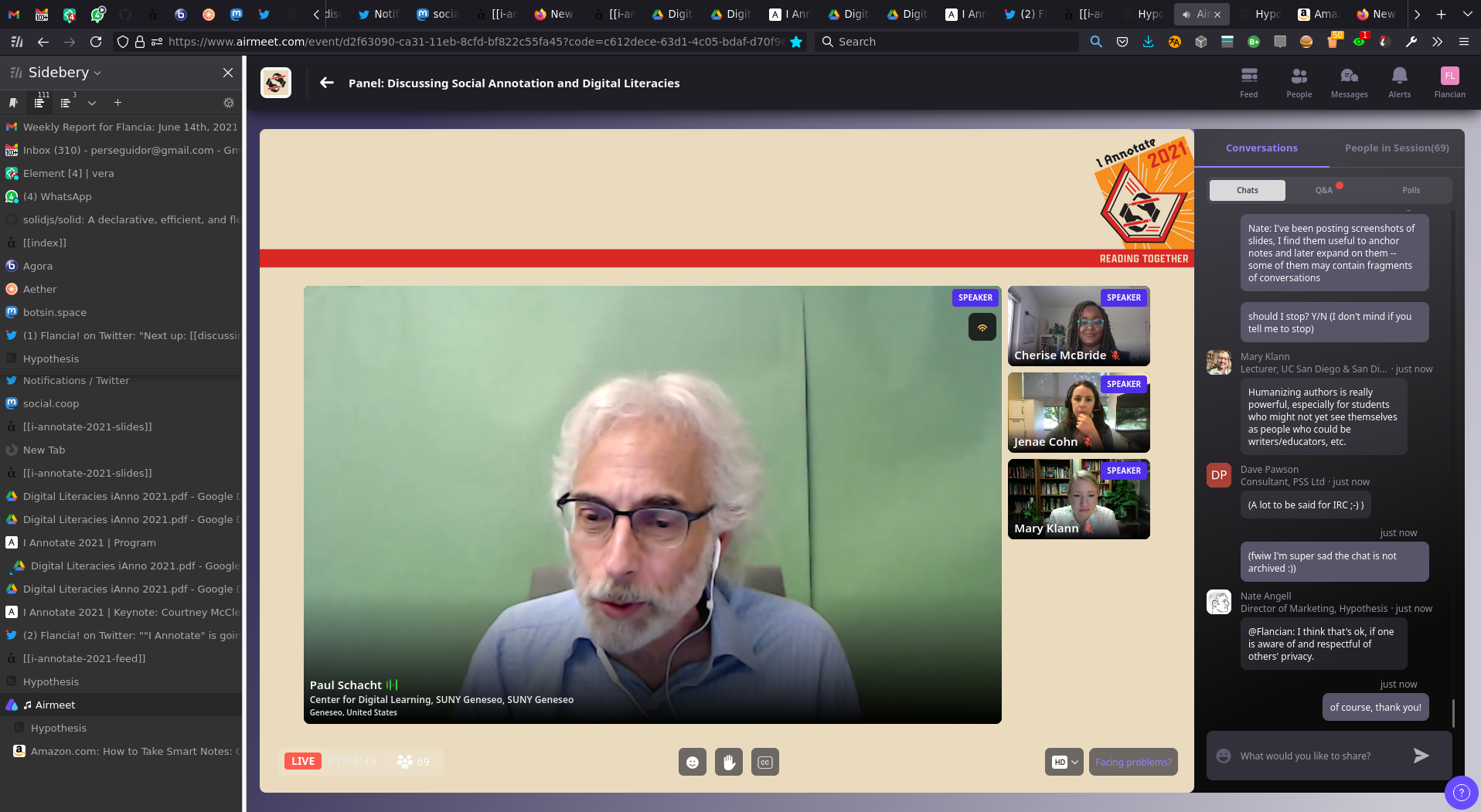
@Flancian, I see your question in the Q&A and may not have a chance to respond out loud. I'll typically put citation managers, note-taking tools (e.g. Evernote, Notion, OneNote) in the toolkit
citation mangers tend to be Zotero, Mendeley, and, when I've worked at institutions with librarians that support it, RefWorks and EndNote